
Pet Care Library
Why Do Cats Get Dehydrated Easily? Causes, Signs, and How to Keep Your Cat Healthy
Vet Approved Content by Dr. Sue
When was the last time you saw your cat drinking water? Cats have a lower thirst drive than most animals, so they don’t always spend a long time at the water bowl like many dogs tend to do. However, dehydration can also be hard to notice in cats, as they’re also very likely to hide early symptoms until it starts to cause problems. Even mild dehydration can affect digestion, temperature regulation, blood flow, and kidney function.
Knowing the reasons why cats get dehydrated can help you make the needed changes to support their health. This guide explains why cats are prone to becoming dehydrated so quickly, what symptoms to look for, the most common causes, and how to help your cat stay hydrated.
Key Takeaways
- Cats are naturally less thirsty than other animals, which makes them more prone to dehydration, especially when they eat dry foods.
- Some of the early signs of dehydration in cats include lethargy, dry or tacky gums, sunken eyes, and tenting of the skin.
- Moisture-rich food and multiple fresh water sources can help keep your cat hydrated.
- Dehydration can also be a symptom of some underlying health issues like diabetes or kidney disease.
- Seek veterinary care promptly if you suspect severe dehydration. Early treatment can prevent more serious complications.
So, Why Do Cats Get Dehydrated Easily?
Cats get dehydrated because their bodies are used to getting moisture from prey, not from frequent trips to a water bowl. In the wild, cats hunted for small animals with high water content to help them stay hydrated. Modern cat food is very different, especially because most cats eat dry kibble. Here are some of the common reasons why cats get dehydrated easily.
Cats Evolved as Desert Animals
Cats get dehydrated easily because they have a low thirst drive. Their ancestors evolved as desert animals that obtained much of their water from moisture-rich prey. Because of that, many cats don’t feel thirsty as quickly as dogs or humans. Their instinct is to conserve water and rely on food for moisture.
Wild cats met most of their hydration needs through moisture-rich prey. Today, many domestic cats eat dry food, which contains only about 6% to 10% moisture. Although cats usually drink more water to compensate, research shows they still consume less total water than cats feeding on wet food, which typically contains 70% to 80% moisture (Chandler, 2014; Zanghi, 2020).
Modern Lifestyles Increase Dehydration in Cats
Indoor life can add to the problem. Heated homes, air conditioning, hot weather, and limited activity can affect water needs. Some cats also dislike the taste of tap water, the smell of dirty water bowls, or the location of their bowl.
A cat may also avoid drinking if the bowl is too close to food or the litter box. Other cats prefer running water, which is why a cat water fountain can help encourage drinking.
Common Causes of Dehydration in Cats
Dehydration in cats is often a sign that something else is happening. Sometimes the issue is simple, such as insufficient water intake. Other times, dehydration points to an underlying medical cause that needs veterinary care. Indoor living, heat exposure, illness, and fluid loss can add to the risk of cat dehydration.
Low Water Intake
Low water intake is one of the most common causes of dehydration in cats. Cats don’t drink enough water when they rely heavily on dry food, especially if they don’t enjoy their water source.
Unwashed water bowls, stagnant water or water type (tap vs. spring water), overcrowded eating areas, and stress may reduce your cat’s water intake. This is why fresh water should always be accessible to your cat. You can place several water bowls in peaceful and convenient locations around the house.
Fluid Loss
Cats lose fluids due to urination and breathing. Vomiting, diarrhea, fever, rapid breathing, heat, and dehydration can also make your cat lose more fluids than usual.
This can be life-threatening if the cat can’t quickly replenish fluid losses through proper hydration. High temperatures also increase fluid needs in cats. Therefore, on warm days, pay attention to your cat’s drinking behavior, appetite, and bathroom habits.
Medical Conditions
Some diseases increase fluid loss and disrupt normal hydration. Medical conditions such as chronic kidney disease, diabetes mellitus, hyperthyroidism, and gastroenteritis may contribute to dehydration in cats.
The most common medical condition is chronic kidney disease, as hydration and kidney function are closely linked. Chronic dehydration places extra stress on the kidneys over time, leading to kidney disease, which can also worsen dehydration.
Are Certain Cats Prone to Dehydration?
Certain cats are more prone to dehydration than others. Older cats, kittens, cats with chronic illness, and cats recovering from vomiting or diarrhea are more prone to dehydration.
A feline friend with kidney disease, diabetes, or ongoing digestive problems may need a hydration plan from a veterinarian. In some cases, veterinarians may recommend additional subcutaneous fluids at home when appropriate.

Signs Your Cat Is Dehydrated
Cats hide discomfort well, so early signs of dehydration can be subtle. You may notice a change in behavior before you see obvious physical symptoms.
Early Symptoms
Early signs of dehydration may include reduced appetite, lethargy, weakness, dry mouth, dry or tacky gums, and less interest in normal routines. A dehydrated cat may sleep more, avoid play, or seem unusually withdrawn.
Some cats also show changes in litter box habits. Smaller clumps of urine, fewer trips to the litter box, or straining can signal a health problem that needs attention.
Physical Signs
Physical signs of dehydration include sunken eyes, tacky gums, increased heart rate, and poor skin elasticity. A simple skin turgor test may help you assess hydration. Gently pinch the loose skin between your cat’s shoulders, then release it. With normal hydration, the skin should return quickly.
Skin tenting, in which the skin remains raised or returns slowly, may indicate dehydration in cats. While this test is useful, it isn’t perfect. Older cats and very thin cats may have reduced skin elasticity even when they’re not dehydrated.
When to Call a Veterinarian
Contact your veterinarian right away if your cat:
- Appears dehydrated
- Is extremely lethargic or weak
- Refuses to drink water
- Vomits repeatedly
- Has ongoing diarrhea
- Collapses
- Develops sunken eyes
Severe dehydration can quickly become life-threatening and requires prompt veterinary treatment. Veterinarians may perform a skin turgor assessment, bloodwork, urinalysis, and other laboratory tests to evaluate the severity of dehydration. You can treat mild dehydration with fluids under the skin, but severe dehydration requires intravenous fluids in a hospital.
How to Prevent Dehydration in Cats
Prevention works best when it becomes part of your daily routine. The goal is to make hydration easy, appealing, and consistent.
Encourage More Water Intake
Start with fresh water every day. Wash water bowls often, and place them away from the litter box. Some cats prefer wide, shallow bowls because their whiskers don’t touch the sides.
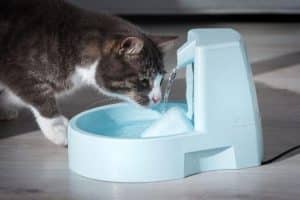
Multiple water bowls can help, especially in multi-level homes. Bottled water may help if your cat dislikes tap water. A cat fountain or water fountain can also be useful, as cats often prefer running water.
Increase Protein Content of the Diet
This increases water intake vs. encouraging more water intake with bowls, types of water. That would be the biologically appropriate way to help with water intake vs. getting them to drink more:
Cats fed high-protein diets (65% crude protein; CP) compared to cats fed a low protein diet (26% CP) with the same level of salt (Hashimoto et al., 1995), and cats fed high-salt diets (11.51–16.74 g Na/MJ) compared to cats fed low-salt diets (<7.32 g Na/MJ) with the same level of protein (Hawthorne and Markwell, 2004) had increased water consumption.
Increase Moisture in Your Cat’s Diet
Wet food can help prevent dehydration because it adds water directly through meals. A wet food diet is especially helpful for cats that rarely drink from a bowl.
You can also add warm water or low-sodium chicken broth to food, as long as the broth contains no onion, garlic, or unsafe seasonings. Meal toppers can encourage eating and increase moisture when rehydrated.
If your cat enjoys variety, you can serve our freeze-dried cat food with added water to create a softer, moisture-rich meal. At Fresh Is Best, we freeze-dry our products in small batches with high-quality ingredients, giving cat parents a simple way to support better nutrition without unnecessary fillers.
Monitor Daily Habits
Check your cat’s food and water intake twice daily. You don’t need to measure every sip, but you should know what’s normal for your cat. Watch appetite, energy, litter box habits, and gum moisture. If your cat suddenly drinks much more or much less than usual, call your veterinarian. A change in drinking can point to kidney disease, diabetes, or another underlying health issue.
For extra meal interest, rehydrate meal toppers for cats and add them to meals. They’re a practical way to add aroma, texture, and moisture without changing your cat’s entire routine.
Supporting Your Cat’s Long-Term Hydration
Long-term hydration is about consistency. Keep fresh water available, feed moisture and protein-rich food when possible, and schedule routine veterinary care. Older cats need extra attention because aging can affect thirst, kidney function, appetite, and organ function. Monitoring small changes early can help your veterinarian catch health problems before they become severe.
Nutrition choices also matter. A moisture-rich diet supports daily hydration, while high-quality protein helps maintain good health. If your cat needs dietary variety, our rabbit recipes offer a novel, protein-rich option made with the same ingredient-focused standards.
You can also use pet treats and chews as part of a balanced routine, but treats should never replace fresh water, complete meals, or veterinary care.
Frequently Asked Questions
How Do I Rehydrate My Cat Quickly?
If you think your cat is dehydrated, start by giving them fresh water and moisture-rich food. Avoid forcing your cat to drink, as this can cause choking or added stress. If your cat seems weak, won’t drink, is vomiting, or has diarrhea, contact your veterinarian as soon as possible. Veterinarians can administer fluids under the skin for mild dehydration, or use intravenous fluids for severe dehydration. They may also perform lab tests to determine the severity of dehydration and identify any underlying health issues.
How Much Water Should a Cat Drink Each Day?
As a general guideline, cats should drink about 4 ounces of water for every 5 pounds of body weight each day, including the moisture they get from food. Cats eating wet food often drink less from their water bowl because wet food contains up to 80% moisture. During hot weather or periods of increased activity, your cat may need more water. Monitoring your cat’s food and water intake twice daily can help you spot changes early.
Can Dry Food Cause Dehydration?
Dry food doesn’t automatically cause dehydration, but it can increase the risk if your cat doesn’t drink enough water. Dry kibble contains only about 6% to 10% moisture, compared to wet food’s 70% to 80%. Because cats naturally have a low thirst drive, many don’t fully replace the moisture they’re missing from dry food alone. Offering fresh water at all times and including moisture-rich meals can help support healthy hydration.
Can Dehydration Damage Kidneys?
Yes. Chronic dehydration can place extra strain on the kidneys and contribute to kidney disease over time. It can also worsen existing kidney disease and, in severe cases, increase the risk of kidney failure. Poor hydration may also contribute to urinary problems, including urinary stones, because concentrated urine allows minerals to build up more easily. This is why healthy hydration is an important part of long-term kidney health.
Is Wet Food Enough to Keep Cats Hydrated?
Wet food is an excellent way to increase your cat’s daily moisture intake because it contains up to 80% water. Even so, always ensure that fresh water is available. Some cats still prefer to drink from a bowl or fountain, while mixing water with freeze-dried food is more appealing for others. A combination of wet food and easy access to clean drinking water gives most cats the best chance of staying well hydrated.
Can I Treat Dehydration at Home?
You can manage mild dehydration at home by encouraging your cat to drink fresh water and offering moisture-rich meals. However, if your cat appears lethargic, refuses water, continues vomiting, has diarrhea, or shows signs such as dry gums or sunken eyes, contact your vet immediately. Don’t delay treatment, as dehydration can signal an underlying medical condition that needs professional care.
Are Senior Cats More Likely to Become Dehydrated?
Yes, because older cats are more prone to diseases like chronic kidney failure, diabetes, or even hyperthyroidism. These cats may also be eating or drinking less than in their younger days. It’s important that you take your elderly cat to regular vet visits, monitor their daily fluid intake, and feed them wet food.
How Can I Encourage My Cat to Drink More Water?
Replace your cat’s water with fresh water every day and clean water bowls regularly to keep them appealing. Place several bowls around your home or use a fountain if your cat prefers moving water. You can also add water to meals or feed your cat wet food to increase moisture intake. If you’re checking hydration at home, your veterinarian may recommend a skin turgor test (gently lifting the skin between your cat’s shoulder blades). But this shouldn’t replace a professional examination if you suspect severe dehydration.
Conclusion
Cats are naturally less thirsty than most animals. Dehydration is common in cats because of their low thirst drive, modern diets, indoor living, and the hidden signs of illness.
That’s why it’s important to be proactive and observe your cat’s behavior, ensure they have access to fresh water, feed meals that are high in moisture, and reach out to your vet if you notice any of the symptoms discussed in this article. Early recognition will help improve your cat’s health and keep the dehydration problem from worsening.
Proper nutrition is also very important. At Fresh Is Best, we freeze-dry small-batch, ingredient-focused cat food that fits into a hydration-supportive feeding routine when you serve it with added moisture. With these simple daily care tips and the right food choices, you can help keep your cat hydrated and healthy.
References
- Chandler, M. (2014). Wet versus dry and other factors when choosing an optimum diet. Veterinary Times.
- Zanghi, B. M. (2020). Leading cats to water: Strategies for increasing water intake. In Recent Advances in Animal Nutrition – 2020 (pp. 85–99). Nottingham University Press.

NOTE: The statements made on this website have not been evaluated by the Food and Drug Administration. These statements and the products of this company are not intended to diagnose, treat, cure, or prevent any disease.
Please consult your veterinarian before implementing any new diet, exercise, and dietary supplement programs, especially if your pet has preexisting medical conditions or is taking prescribed medications. The statements made on this website are for educational purposes only and are not meant to replace the advice of your veterinarian.
Proper treatment of health conditions depends upon several factors, including, but not limited to, your pet’s medical history, diet, lifestyle, and medication regimen. Your veterinarian can best assess and address your pet’s individual health care needs. You should consult with your veterinarian before starting a new diet, supplement, or treatment regimen. Individual results may vary.